
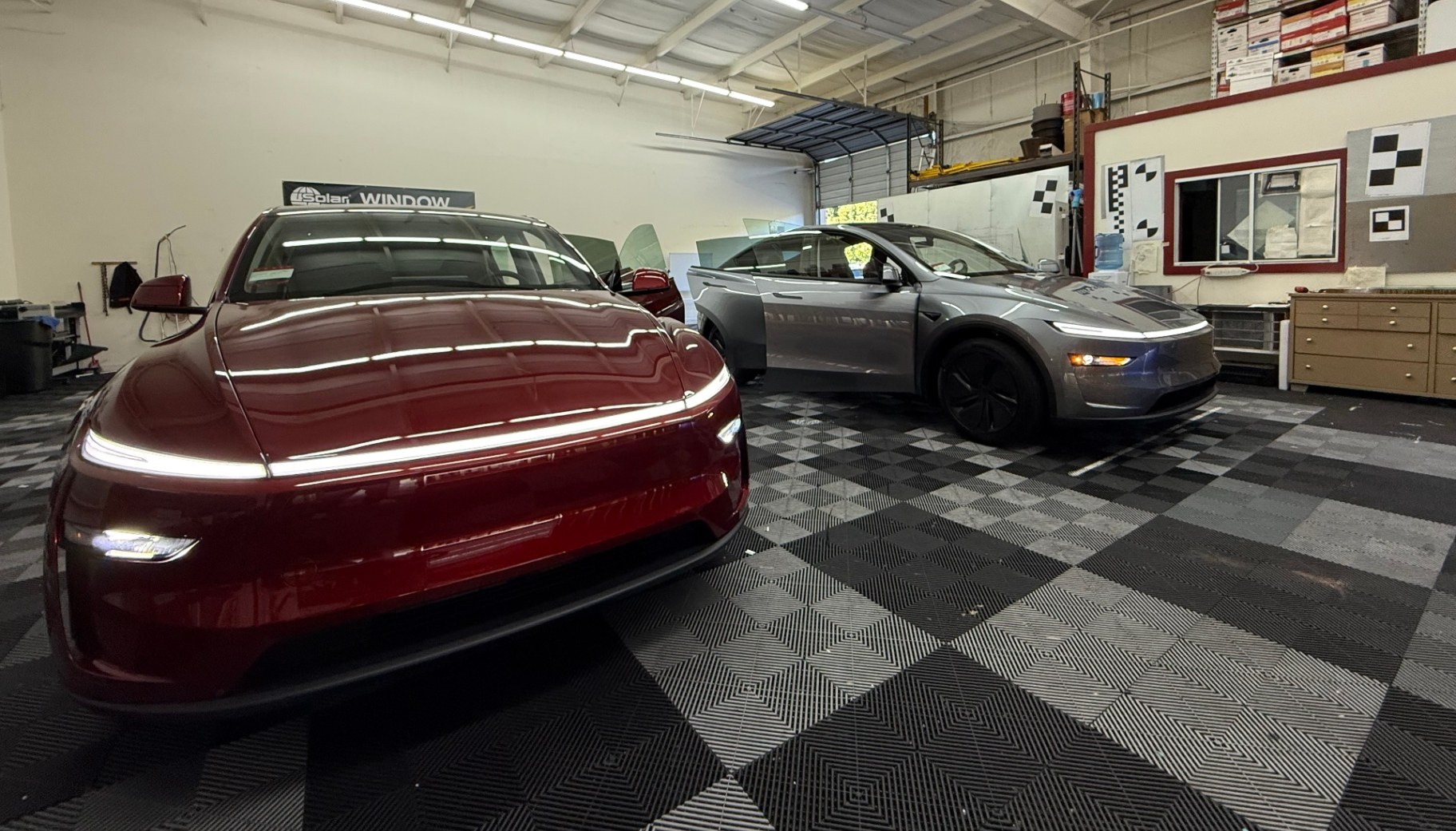
Two features turn a routine windshield replacement into a job where the exact part matters: a heads-up display and acoustic laminated glass. Both are common on newer Lexus, BMW, Mercedes, Audi, Genesis, Tesla, and well-equipped Toyota and Honda models — and both are easy for a quoting system to miss.
What makes a heads-up display windshield different
A HUD windshield contains a specially engineered wedge-shaped interlayer. It exists so the projected image does not appear twice. Standard laminated glass has parallel surfaces, so a projected image reflects off both of them and the driver sees a ghost image offset from the real one.
Install a non-HUD windshield in a HUD vehicle and the display may look doubled, blurry, or out of focus at the edges. Nothing can be adjusted to correct it — the only fix is the correct glass.
What acoustic glass actually does
Acoustic windshields use a sound-damping interlayer between the glass layers, tuned to reduce wind and road noise in the frequency range most noticeable in the cabin. On a freeway commute the difference is real and measurable.
Substituting a standard laminated windshield usually fits and seals fine, so the problem is not obvious on delivery. Owners notice it later as a cabin that is louder than they remember — often without connecting it to the glass. On I-580 and I-680 at speed, this is the most common complaint we hear about work done elsewhere.
How to know what your vehicle has
- Look for a small HUD marking or a wedge symbol in the printed band at the bottom corner of the current windshield.
- Acoustic glass is often marked with a word such as "Acoustic," "SoundScreen," or a small ear or wave icon in the same band.
- Check whether a speed or navigation image projects onto the glass when the car is on.
- Check the original window sticker or build sheet if you still have it.
If you are unsure, send us a clear photo of the lower corner markings. We read them daily.
Other features tied to the specific part
The same care applies to rain and light sensors, humidity sensors, heated wiper park areas, infrared-reflecting solar coatings, antenna elements, and camera brackets for driver assist. A windshield can look identical and still be wrong for your car.
Solar-coated glass deserves a mention because it directly affects comfort: replacing it with an uncoated part makes the cabin noticeably hotter in Tri-Valley summers.
Why the cheapest quote is sometimes the wrong quote
A quote that seems unusually low is often priced on a base part for your model. That is not necessarily dishonest, but it is not the same glass. Ask explicitly whether the quote includes HUD, acoustic interlayer, solar coating, sensors, and calibration when required.
We quote the part your vehicle actually has and tell you what it is before the order goes in.
Confirm your part before you book
Call 925-492-7272 with your year, make, model, and trim, or see our windshield replacement page. If your vehicle has a forward camera, our in-house calibration is done in the same visit.